Monday, December 21, 2015

Candidates' Health Care Plans

This is not to endorse "planning" but for convenience I have made a list of links to Presidential candidate's health care plans.

Read about America's current plan here.

Tuesday, December 15, 2015

Robert Reich: Changing the Facts to Fight the Good Fight

Yesterday Robert Reich claimed that

"Most people who lose their jobs don't even qualify for unemployment insurance."

As you can see from my cut and paste of his quote (italics added), he cited a newsmax article.  But that article lists several reasons why the unemployed choose not to apply for benefits.  On this issue of eligibility, the article says that most UNEMPLOYED do not qualify.  The reason is typically that the non-qualifying unemployed DID NOT LOSE THEIR JOBS.  As the article says,

"Unemployment benefits are only available to those who lost a job through no fault of their own. ... Many of the unemployed are recent college or high school graduates who are now looking for work. Others may have quit their jobs, or they left work years ago to take care of children and are now job-hunting again. People in those categories make up 52 percent of the unemployed."

You would think that Mr. Reich knows the facts because he was IN CHARGE OF THE FEDERAL DEPARTMENT OF LABOR, which is intimately involved with unemployment insurance benefits.  But he also knows a good narrative, which is that job loss is typically endured with no government help.


Saturday, December 12, 2015

Timothy Jost poses an economics question

In reading the [CBO's analysis of ACA marginal tax rates and the labor market], questions that occurred to me, admittedly a non-economist, included why there is no accounting for the increased employment of health care workers which surely must accompany the coverage expansions?

The answer is:
  • when we redistribute income for the purposes of paying for some people's health care, that likely creates additional jobs in the process of supplying health care to the ACA beneficiaries.
  • But we cannot forget about the other end of the redistribution. Somebody is paying for this, either by paying taxes or loaning money to the government, and that's funds that the payers cannot spend on other things. So there's a reduction in the employment of people who would be supplying the payers (whatever it was that they would have spent money on: anything from food to forming new businesses).
  • The bottom line for labor demand hinges on a comparison of the labor-intensity of healthcare supply and the intensity of supplying those other things.

In effect, CBO and many others assume that they are equally labor intensive, so that there is no net aggregate-labor-demand effect. Only the composition of labor demand is changed.  (If I had to say how the "true" comparison works, I would say that just about anything for low-income people is less labor-intensive than the things bought by high-income people, but this gap is small in comparison to the marginal tax rate effects).


I also addressed a similar question in my earlier Redistribution Recession.

Mr. Jost has been so busy digesting and summarizing ACA regulations (that you for that, sir!) that he probably hasn't had time to look at my books on the economics of Obama-era social programs.

Wednesday, December 9, 2015

Fiscal Policies and the Prices of Labor: A Comparison of the U.S. and the U.K.

Many countries of the world experienced an unusually deep and long recession after 2007.  Over the same time frame, several facets of fiscal policy were changed, especially policies related to taxation and safety net programs.  The purpose of this paper is to compare changes in fiscal policy parameters as they affected the incentives of middle-class Americans and British to be employed.  The U.K. had a “stimulus programme” followed by an “austerity programme.”  The U.S. federal government also passed what it called a “stimulus package,” followed by a major health reform.
Policy labels acquired during legislative processes are not necessarily indicative of economic fundamentals.  This paper comparably quantifies fiscal policy in terms of one of the fundamentals: the wedge between the supply price of labor and the demand price of labor.  It finds that the two countries have been different in terms of the evolution of employment taxation, on average and across demographic groups.  The American stimulus reduced average incentives to be employed by increasing cash and health benefits for the unemployed and for families with low incomes, whereas the British stimulus did the opposite by temporarily reducing its value-added tax rate and permanently reducing its basic income tax rate.  The British austerity program pushed incentives in the opposite direction as its stimulus by permanently increasing its payroll and value-added tax rates.
            The evolution of employment has also been different in the two countries.  Figure 1 displays an index of each country’s employment rates for prime-aged people.[i]  Employment fell sharply in both countries during the crisis, although less so in the U.K.  The U.K. employment recovery began earlier, and by the end of 2014 the U.K. employment rate had exceeded pre-crisis levels.  Because taxes are one (among many) of the determinants of labor market performance, comparable tax measures are necessary for carefully investigating and comparing labor market outcomes.  This paper provides tax measures, and shows how changes in tax rates are linked to specific legislation.

Taxes potentially affect work decisions in a variety of dimensions, for example: the number of weeks worked per year, the number of hours worked per week, whether to work at all during a year, and the amount of effort to put into work.  Due to the prominence of the business cycle during this period and the sheer size of gross monthly employment flows, this paper focuses on the weeks-per-year margin holding constant weekly hours and the probability of not working at all during a calendar year.  In the 21st-century U.K., for example, the single largest quarterly employment decline for the non-elderly population has so far been 0.3 million, as compared to at least 2.6 million non-elderly people who join or separate from an employer during the average quarter.[ii]  Adding just one week out of work before joining, or after separating, would therefore create a remarkable net reduction in the number employed at a point in time.  Also, the large majority of unemployment spells last less than 12 months, and some of those lasting 12 months do not blanket an entire tax year.[iii]
I follow the usual steps of public finance analysis and first look at the tax wedge – the gap between supply and demand prices created by a tax or subsidy.  The next step, left for future research, is to draw conclusions about the wedge’s behavioral effects and ultimate incidence.  Thus, with one exception noted below, the estimates in this paper do not require any assumption about the relative incidence of labor taxes on employers and employees.
Section I discusses the United Kingdom, demonstrating how many of the tax changes were ultimately offsetting in terms of the employment incentives they created.  The primary exception relates to the subpopulation receiving child tax credits, because the phaseout (sometimes referred to as “taper”) rate of those credits increased with little change in the range of incomes over which the phaseout applies.  Section II shows results for the United States, where employment disincentives have increased over time, especially (but not exclusively) among unmarried workers.  Section III shows the evolution of the employer cost and employee benefit from work – the gap between the two is the employment tax wedge – by country for workers in the middle of the wage distribution.  Section IV concludes.


[i] Both series are from the Organization for Economic Co-operation and Development (hereafter, OECD), via the St. Louis Federal Reserve’s FRED database.  In 2007-Q4, the U.K. and U.S. employment rates were 81.5 and 79.8, respectively.
[ii] Average quarterly gross flows are from Gomes (2012, Figure 1), for 1996 through 2010.  Quarterly net employment changes are from the OECD, via the St. Louis Federal Reserve’s FRED database, and, for comparability with Gomes, for the age 16-64 age group. 
[iii] The St. Louis Federal Reserve FRED data series UEMPMED shows that the U.S. median duration of unemployment peaked at 25 weeks in June 2010.  Also note that, for example, an 18-month nonemployment spell lasting from March 2009 to September 2010 nonetheless involves positive weeks worked in both calendar years (tax years in the U.S. coincide with calendar years).

Tuesday, December 8, 2015

Employer penalty amounts for 2016 and 2017

The ACA's employer penalty increases every year. It began in 2014 (although not enforced in that year) at $2,000 per full-time employee-year (over 30 employees). Its amounts in subsequent years:

2015 $2,084
2016 $2,166
2017 $2,265

These are set according to the HHS Secretary's "Premium Adjustment Percentage."

As explained in my book, the employer penalty has a special business tax treatment that makes it more expensive than employee salaries. The salary equivalent of the employer penalties are:

2014 $3,046
2015 $3,174
2016 $3,299
2017 $3,449

After increasing 4 percent in each of the first two years, the lasted annual increase is 5 percent.

Another interesting way to look at it is the number of hours that a $7.25/hour worker has to work to create enough value for his employer to pay the penalty on his behalf (let alone pay the employee's wages):

2014 8.1 hours per week, 52 weeks per year
2015 8.4 hours per week, 52 weeks per year
2016 8.8 hours per week, 52 weeks per year
2017 9.1 hours per week, 52 weeks per year

In other words, only after the ninth hour of work in 2017 will the penalty be paid and there will be value creation that can go toward employee wages, employer profits, or other taxes.

Wednesday, November 25, 2015

My Impression of Woodrow Wilson

Perhaps my favorite economics book is John Maynard Keynes' Economic Consequences of the Peace, which used the Laffer curve (before Laffer himself was born) and other economic ideas to correctly predict disaster following the Treaty of Versailles (ending World War I).

Woodrow Wilson appears throughout the book, at best as a buffoon and at worst as a villain. Keynes writes,

The President was ... lacking that dominating intellectual equipment which would have been necessary to cope with the subtle and dangerous spellbinders.... (p. 25)
...the President had thought out nothing; when it came to practice his ideas were nebulous and incomplete. He had no plan, no scheme, no constructive ideas whatever for clothing with the flesh of life the commandments which he had thundered from the White House. (p. 27)
...he was in many respects, perhaps inevitably, ill-informed as to European conditions. And not only was he ill-informed--that was true of Mr. Lloyd George also--but his mind was slow and unadaptable. (p. 27)

(page numbers are from the Royal Economic Society's 1971 edition).


Keynes may not have told the truth, but I have wondered what the scholars at Princeton thought about having the "slow and unadaptable" mind put on a pedestal on their campus.

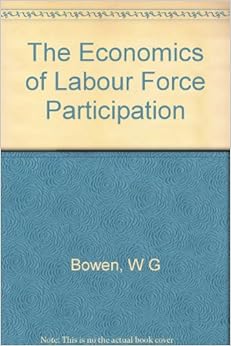
Princeton is probably thinking about selling the naming rights of the Wilson buildings etc. But if they wanted to stick with a Princeton President, I am a fan of William G. Bowen, who (with Chicago alumn T. Aldrich Finegan) wrote

Monday, October 12, 2015

Angus Deaton: Inequality and Good Intentions

Copyright, The New York Times Company

The recent book by today's Nobel Prize winner -- congratulations to him!! -- says good intentions are a barrier to equality and to progress among the world’s poor.

For most of human history, family incomes were barely enough to survive and life was short. But in “The Great Escape: Health, Wealth and the Origins of Inequality,” Professor Angus Deaton of Princeton writes that while economic progress allowed much of the world to escape poverty, “escapes leave people behind, and luck favors some and not others; it makes opportunities, but not everyone is equally equipped or determined to seize them.”

Professor Deaton also deals with the events after the great escape: that is, how the progress of some families and nations affects the prospects for progress of those initially left behind.

Imitation is one force and works in the direction of progress for all. The poor can look to the progress of others to embark on their own escape. Professor Deaton shows how the imitation of new methods has occurred, for example, with medical technologies that have allowed the residents of a number of poor nations to live longer than Americans did just a hundred years ago, and sometimes longer than Americans live today.

But new methods can harm those with vested interests in the old ones, and the vested interests can use their political power to block competition and progress. Professor Deaton explains how “the emperors of China, worried about threats to their power from merchants, banned oceangoing voyages in 1430,” adding, “Similarly, Francis I, emperor of Austria, banned railways because of their potential to bring about revolution and threaten his power.”

Progress begets inequality, and the resulting inequality can either encourage more progress or impede it, or both. Professor Deaton suggests that inequality in the modern United States has had both of these effects.

He points to a third influence of progress and inequality on outcomes for those left behind: good intentions. As part of the world becomes rich and no longer worries about day-to-day survival, it can look outward. Many residents of developed countries have a “need to help” those less fortunate.

But the attempts to help often – perhaps even usually – go awry.

As medical progress began to diffuse around the world, people stopped dying so young, and that made for an increase in population, especially in less-developed countries. Developed countries thought they would help poor nations by encouraging population control, based on the dubious proposition that more people means more poverty.

“What the world’s poor – the people who were actually having all these babies – thought about all this was not given much consideration,” Professor Deaton says, citing China’s continuing one-child policy as an example. He adds: “The misdiagnosis of the population explosion by the vast majority of social scientists and policy makers, and the grave harm that the resultant mistaken policy did to many millions, were among the most serious intellectual and ethical failures of a century in which there were many.”

Other types of foreign aid to developing nations have also been a disaster, he says, with “pictures of starving children being used to raise funds that were used in part to prolong war, or to N.G.O.-funded camps being used as bases to train militias bent on genocide.”

Professor Deaton’s book is primarily international in focus, and he insists that help for the American poor is different and more effective than aiding the world’s poor. Nevertheless, American readers may be left wondering how much aid to American poor, is, as Professor Deaton says, “more about satisfying our own need to help, and less about improving the lot of the poor.”

Sunday, October 4, 2015

Amazon began shipping my new book today!

It is full of examples. The effects of Obamacare on the workweek are shown with diagrams rather than equations, which now part of an optional appendix.

Spending on health care has grown faster than the economy itself, even while the share of the population without health insurance was increasing. The Affordable Care Act (a.k.a., Obamacare) intends to reverse these trends, but in doing so has economic side effects. Businesses are complaining about the ACA's new tax and regulatory burdens, whereas supporters say that it is a long-overdue "shot in the arm" that will promote entrepreneurship and a "more rapid economic recovery."

Positive and negative tax effects of the ACA are carefully documented. The book offers a comprehensive market analysis of the law that arrives at conclusions as to effects on work hours, productivity, and national income. It shows what the ACA means for economic performance in the years ahead, and explains why forecasters have yet to acknowledge many of the economic forces that have been put in motion.

The book contains numerous facts and economic insights that have been unnoticed by both supporters and opponents. Anyone interested in economic performance over the next several years has to understand the contents of the Affordable Care Act from a labor market perspective and this book is so far the only comprehensive and user-friendly introduction to the topic.

Friday, October 2, 2015

Employment per capita drops 3 out of the last 4 months

through September. Below uses the same methodology I displayed in the past in order to include self-employed workers too. The self-employed component is volatile ... it would be nice to have some kind of error bands on this series ... but that is still work in progress.


Thursday, October 1, 2015

In-kind Taxation in the News

Russia is now drafting soldiers.  Below is a new economic discussion of in-kind taxes, of which the military draft is a good example.


In-kind taxes – obligations of citizens owed in goods or services, rather than money – are some of the most important taxes in human history, and even in recent times are used in significant ways.  For example, according to The Military Balance, 59 percent of countries in the world in 1995 obtained military manpower by conscription: forcing citizens into military service.  More than six dozen countries, including the United States, have constitutional provisions for taking private land using the power of eminent domain. Eminent domain is also used to redistribute intellectual property, and may be employed more frequently in the future as that type of property becomes more valuable.  In-kind “public service” labor payments to local governments can be a major part of the tax burden faced by the poor in developing countries.  Another example: two dozen countries compel their citizens to participate in civic elections. 

Although public finance deals extensively with the question of cash versus in-kind transfers, in-kind taxes are almost completely neglected.  For example, neither of the public finance textbooks by Stiglitz and Rosen mentions in-kind taxes in general, or labor conscription in particular.  The purpose of this paper is to examine the efficiency properties of in-kind taxation (hereafter, IKT), with special emphasis on avoidance behaviors.

Behaviors for avoiding the Vietnam War draft are still famous today.  They include entry into protected occupations, obtaining political favors, moving to Canada, or embellishing medical conditions.  Quantitative work on avoidance behaviors has shown that the Vietnam War draft induced a significant increase in college enrollments (Baskir and Strauss 1978).  Desertion by conscripts can be rampant, and draftees are less likely than volunteers to reenlist when their required tour is finished.   Leon Friedman (1969, pp. 1545-6) describes evasion of the Union Army’s draft, “enrolling officers … were frequently lied to, avoided, and even physically attacked… new towns sprang up just across the northern borders in Canada … some men maimed themselves in order to fail the physical requirements for the army.”  Landowners are known to modify their property in order to avoid being targeted for condemnation or other limits on land rights.  Stroup (1997, p. 57) describes how landowners have reacted to the Endangered Species Act by “managing their land … in a way that almost assures that it will not be suitable for listed species.” 

Avoidance activities like these serve to restrict the quality and quantity of supply of resources to be taken, yet the small literature on the economics of eminent domain and military conscription typically takes the supply as given, emphasizing instead the purported tendency of in-kind taxation to distort comparative advantage (i.e., that the public project fails to be supplied by those most suited to do it) while it economizes on treasury revenue.   This paper treats IKT as a price-regulation phenomenon – the public recruiter is a buyer who has coercive power over its suppliers – and explicitly models the social costs, and private benefits, of suppliers’ avoidance behaviors.

In-kind taxation has been implemented in a variety of ways. Supplier compensation is one variable. Another is the granting of an option (if any) for suppliers to substitute a monetary tax payment for their obligation to supply under the IKT.  The price-control framework readily addresses various implementation options, offers new conclusions, and changes some old ones.  Under some conditions, “fairer” IKTs – those that do not accept monetary payments and thereby widely distribute the IKT obligation – are more efficient than less fair IKTs.  These results may help explain where and when various implementation options are exercised.

The IKT implementation options present a tradeoff between avoidance costs and opportunity costs.  IKT’s are capable of realizing many of the gains from comparative advantage, even while controlling prices.  This implication appears to match the reality in which the resources obtained through IKT are far from random.  Even among men born 1950-53 whose military draft eligibility was chosen by a random draft lottery, military enlistment was by no means random.  Angrist (1990, p. 315) refers to “the fact that armed forces selection criteria were not random ...” and reports that more than three-quarters of draft-eligible men in these cohorts did not serve in the military.   At the same time, roughly ten percent of those not draft eligible did serve. Although IKTs distort comparative advantage to some degree,  the price control framework suggests that comparative advantage distortions might enhance efficiency because they can alleviate incentives to avoid the tax.

Previous work on conscription has debated the nature of the relationship between monetary taxes and in-kind taxes.  Lee and McKenzie (1992), Ross (1994), and Warner and Asch (1996) claim that economizing on treasury revenue, as in-kind taxation is supposed to do, is socially valuable because of the deadweight costs of collecting monetary taxes.  However, these papers do not model the social costs of effort to avoid IKTs; real-world IKTs interact with income taxes, and the former may generate more deadweight costs because they are more concentrated.  Birchenall and Koch (2014) use a mechanism-design framework to look at the two types of taxes simultaneously, and conclude that IKTs may reduce overall efficiency by raising the marginal deadweight cost of income taxes.  This paper does not contribute to the money-versus-IKT debate, and just assumes that in-kind taxation reacts not only to the efficiency considerations noted above, but also to social or political preferences to regulate prices paid to suppliers.  

Section II begins with this paper’s conceptual point of departure: a model of avoidance behavior as a Tullock-style rent-seeking contest.  A simple, but critical, result is that the social  costs of avoidance are convex in the amount of avoidance.  Section III lays out the other dimensions of IKT policies, relates them to empirical observations of military recruitment schemes, and interprets them in an equilibrium context.  Section IV overturns some of the conclusions from the literature.  Section V looks at policy options for the mix of social costs, and suggests that comparative advantage distortions may not be the primary social cost of IKTs.  Section V concludes with some ideas of why the incidence and design of IKT tax policies vary over time, by country, and across policy domains.