Showing posts with label tax incidence. Show all posts

Tuesday, December 27, 2022

Lightning Strikes Coale Twice?

Mr. John P. Coale was one of the plaintiffs’ lawyers that initiated the first tobacco settlement agreements, which included a historic and ingenious scheme for individual states to levy the economic equivalent of national (sic) excise taxes. The scheme has been a topic in my excise-tax lectures for as long as I have been teaching them. Let’s not forget that Mr. Coale entered the fray when tobacco companies were thought to be invincible in the litigation arena.
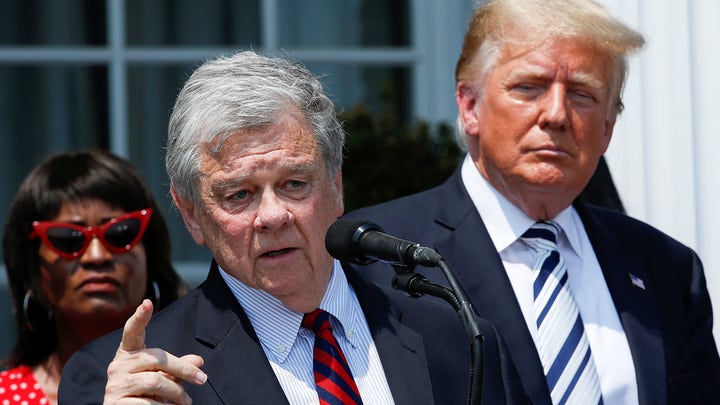

I met Mr. Coale in Atlanta this year (2022), at an awkward meeting of Republicans – awkward because he is a trial lawyer, which is an occupation that perennially gets its regulatory favors from Democrats (President Trump’s deregulation team took pride in cutting out those favors, e.g., Fair Pay and Safe Workplaces EO, CFPB Arbitration rule, the Fiduciary rule, the Borrower defense rule, the NLRB "Murphy Oil" Rule, and NLRB workplace grievances).

Mr. Coale was and is suing big tech on behalf of Donald Trump, accusing them of violating the 1st Amendment of the U.S. Constitution as “state actors.” He cited (as I remember) the 1989 Supreme Court case Skinner v Railway Labor Executives’ Association, finding that “Although the Fourth Amendment does not apply to a search or seizure, even an arbitrary one, effected by a private party on his own initiative, the Amendment protects against such intrusions if the private party acted as an instrument or agent of the Government.” This conclusion is even more compelling for the first amendment, Coale says.

I wondered, with much skepticism, whether his big tech case might be anywhere near as spectacular as the big tobacco ones. Now it appears that big tech was even more integrated with the federal government than Mr. Coale initially accused. And Elon Musk did the discovery for him.


Friday, October 25, 2019

A Wealth of Reading about Wealth Taxes

courtesy of Torksten Slok.  See also Chapter 18 of Chicago Price Theory.

Wealth Taxation and Wealth Accumulation: Theory and Evidence from Denmark

Behavioral Responses to Wealth Taxes: Evidence from Sweden

Make your own Tax plan

How would a progressive wealth tax work? Evidence from the economics literature

Global Wealth Inequality

Progressive wealth taxation

Estimating the economic impact of a wealth tax

The Top 1 Percent in International and Historical Perspective

Should the Rich Be Taxed More? The Fiscal Inequality Coefficient

Ending Special Tax Treatment for the Very Wealthy

Wealth taxation: An introduction to net worth taxes and how one might work in the United States

Use It Or Lose It: Efficiency Gains from Wealth Taxation

Pareto and Piketty: The Macroeconomics of Top Income and Wealth Inequality

U.S. Taxes are Progressive: Comment on “Progressive Wealth Taxation”

Distributional effects of public law

Wealth inequality in the United States since 1913: evidence from capitalized income tax data

The missing profits of Nations

Can Wealth Taxation Work in Developing Countries? Quasi-Experimental Evidence from Colombia

Tax Evasion and Inequality

Top Wealth in the United States: New Estimates and Implications for Taxing the Rich

The Other America: Inequality, Taxes, and the Very Rich

IMF: Tackling Tax Havens

Taxing Wealth and Capital Income

Rethinking capital and wealth taxation

The Elephant Curve of Global Inequality and Growth

Global inequality dynamics: new findings from wid.world

Exploding wealth inequality in the United States

Capital accumulation, private property and rising inequality

The evolution of wealth inequality over half a century: The role of taxes, transfers and technology

The Research Agenda Post-“Capital in the 21st Century”

Shifting tax burden to top income earners: what is the best way to reduce inequality?

Why Market Imperatives Invigorate Economic Inequality? Cobb-Douglas Utility Remodelled

Improving the Measure of the Distribution of Personal Income